
The Reserve Bank is working with the government to thrash out a payment settlement solution for Indo-Russian trade, which is hit by the economic sanctions imposed on Moscow after it invaded Ukraine, but asserted that any such solution will be 'sensitive' to the prevailing economic blockade, the central bank said. RBI Governor Shaktikanta Das was quick to add that it is a matter that the government has to deal with first, and as far as the central bank is concerned, obviously, we will not do anything which goes against the sanctions. RBI Deputy Governor T Rabi Sankar said since the Ukraine war has disrupted trade and payments, we are discussing with all stakeholders, and at the same time, we are sensitive to the economic sanctions.

India, China and other countries that have been cutting their oil imports from Iran have reached a point where it is "very very difficult" to reduce any further without seriously impacting their economies, US Secretary of State John Kerry has told lawmakers.

Shipments from Russia rose nearly 33 per cent to $1.1 billion in March from $831.17 million in the previous month, which was when the country mounted aggression on Ukraine and faced sanctions from Western nations, the data accessed by Business Standard shows. Growth in imports was largely on account of oil, people aware of the matter said. The Department of Commerce is learnt to have written to the Ministry of Petroleum and Natural Gas (MoPNG), seeking details of imports, including the payment mechanism, which India has not made public.
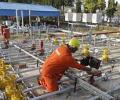
India is the world's fourth-largest importer of natural gas, accounting for six per cent of the global market.

Japan is unlikely to be the "benchmark" for India when the Obama administration initiates the process of deciding the fate of Iranian sanctions on dozen countries, which according to a US legislation need to "significantly" reduce their dependence on oil from Iran.
India's insistence on continuing to buy Iranian oil defying United States sanctions, drawing common approach on China, Af-Pak situation and peace negotiations with Taliban dominated the talks of Foreign Secretary Ranjan Mathai, who concluded his maiden bilateral visit in Washington on Thursday. The "serious situation" in Maldives after the resignation of President Mohamed Nasheed and the multi-billion jets deal found passing mentions during Mathai's meetings.

Oil Minister M Veerappa Moily has suggested pricking the ballooning oil bill with everything from a street theatre campaign encouraging lower fuel use, to shutting fuel stations, to increasing imports from Iran.
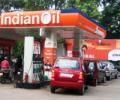
The government on Thursday sanctioned Rs 17,772 crore (Rs 177.72 billion) cash subsidy to fuel retailers like IOC to cover for half of the revenues they lost on selling diesel and cooking fuels below cost in the September quarter.

Stocks of Indian companies with exposure to Europe fell on Tuesday amid concerns about the impact on their sales in case the Russia-Ukraine crisis worsens and the US and its allies impose economic sanctions on Russia. While top conglomerates, including Reliance Industries, the Tata group, and Aditya Birla Group, said they did not have any significant exposure to Russia, executives of some of the oil and gas, pharmaceutical, and tea companies said they were monitoring the situation closely as they earned substantial income from the region. Russian President Vladimir Putin on Monday ordered troops into two breakaway regions of eastern Ukraine after announcing that Russia would recognise their independence.

India imported 11 million tonnes of crude oil from Iran in the fiscal year ending March 31, 2014, down from 13.14 million tonnes in the previous fiscal
Outside Saudi Arabia, there is no spare capacity. Sanctions on Iran have meant that no new outside funds have come to bolster the current production of around 4 million barrels a day. Outside Saudi Arabia, there is no spare capacity. Sanctions on Iran have meant that no new outside funds have come to bolster the current production of around 4 million barrels a day.

It is going to be a long-term proposition for India -- which has a decades-old relationship with Moscow -- to reorient its foreign policy away from Russia, the US has said, insisting that re-aligning one's approach is not like flipping a light switch.

Both crude benchmarks are now down around 20 per cent since their last peak in June

The powerful United Nations Security Council on Monday unanimously adopted a resolution that endorses the landmark nuclear deal between Iran and six world powers.
Iraq is willing to double the credit period on crude sales to 60 days if Indian refiners buy more in 2014, the head of refineries at Hindustan Petroleum said. Iran has also sweetened the deal to expand its dwindling market share by offering free shipment and a nominal discount to Indian refiners, sources said last week.

Modi made a strong case for a partnership between the producers and consumers in the oil market as it exists in other markets.

Iran has offered discounts on crude oil price and free shipping if India agrees to buy more of its oil.

India expects to remain unscathed this time, mainly because it is in a sweet spot as the world's third largest oil consumer, after the US and China, says Subhomoy Bhattacharjee.

Khan said that India, which is a part of Quad, has imported oil from Russia despite American sanctions.

Tea planters and exporters are "extremely worried" over the possible impact on their shipments to Russia, India's second largest buyer of tea, in the wake of the Russia-Ukraine crisis. Western sanctions and disruption of payments in dollars as well as transhipments to Russia are expected as a fall-out of Russia launching an attack on Ukraine on Thursday. "The Russian market for Indian tea is extremely important as there are payment issues for shipments to Iran, another vital tea export destination. "Around 18 per cent of India's tea shipments go to Russia," India Tea Association chairperson Nayantara Palchoudhuri told PTI.

Despite the recovery to above $40 levels after hitting $28-29 in Jan, worries of over-supply in the face of weak demand remain.

From the Sensex pack, Bajaj Finance, Bajaj Finserv, Reliance Industries, Wipro, HDFC Bank, HDFC, ICICI Bank and Tata Steel were the major laggards. ITC was the lone winner in the Sensex pack.
The United States is in touch with several countries, including India and Turkey, on how to "significantly reduce" their dependence on Iranian oil to avoid American sanctions in this regard, a State Department official has said. "We are working hard with India to see if we can help with regard to reducing the country's dependence and the dependence of any of the other countries on Iranian crude, and looking at alternative sources of supply as well," said a spokesperson.

Reflecting subdued global economic growth, India's outward foreign direct investment (FDI) fell by 33.3 per cent sequentially to $1.21 billion in August, compared to over $1.82 billion in July.

Those who consider the rupee as a proxy for virility have started thumping their chests and dreaming of dethroning the dollar from its coveted position, observes Tamal Bandyopadhyay.
Given that India will get a huge part of its oil supplies from Iran through its government-owned oil PSUs, any unwelcome shocks in global crude rates could be absorbed well enough.
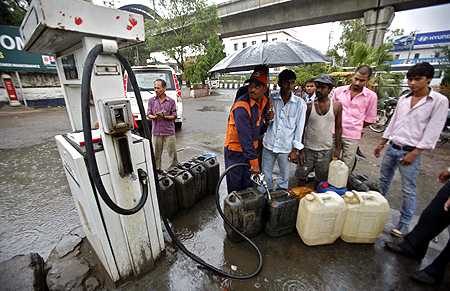
Global supply is staying in excess of demand.

After drastically cutting imports from Iran, India is hoping to win waiver from US financial sanctions on its oil trade with Iran so as to continue to getting supplies from the Persian Gulf nation.

Economics and politics both have major roles in determining oil prices.
The petroleum ministry has sought additional oil bonds worth about Rs 13,000 crore (Rs 130 billion) to cover the revenue loss on fuel sale in the fourth quarter of the current fiscal.
The ruble has recouped most of its losses and become the top-performing currency globally. It continues to gain and is up 60 per cent against the US dollar from its lows in the first week of March. The ruble appreciated to 83 to the dollar intraday on Tuesday against a record low of 139 on March 7.
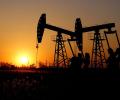
Investors and companies should brace for higher commodity prices over the next few weeks in the backdrop of Russian troops attacking Ukraine on Thursday. Meanwhile, US President Joe Biden threatened new sanctions against Russia for an act of aggression against Ukraine. All this, analysts believe, can push prices of key commodities such as crude oil, ammonia, urea, potash, and phosphates higher.

Making sense of the international crude market is incredibly hard.

oil market remained under pressure and big gains are unlikely.
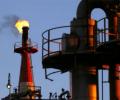
Oil has slumped from above $115 in June 2014 as shale oil from the United States has flooded the market

Saudis are interested in expanding their relationship with India, given it is becoming the main driver of crude demand growth in Asia
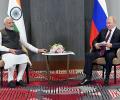
During a meeting with Putin in Samarkand, Modi had told the Russian leader that "today's era is not of war".

Whether this remains under control in the coming months will depend on the future intensity and spread of the Russia-Ukraine war, and the effectiveness of the Indian government's response, points out A K Bhattacharya.

The Western world keeps talking, ratcheting up sanctions, the only thing it can do. The Russians march on to Kyiv and capture Zelensky and key members of his government as part of their 'de-Nazification' drive, predicts Shreekant Sambrani.

EAM Jaishankar's mission is aimed at strengthening India's strategic autonomy in a complex international environment, observes Ambassador M K Bhadrakumar.
